 DEUS
Use case · Game-Based Assessment
Management Trainee assessment
DEUS runs Management Trainee assessments for companies in Indonesia through short games played in a browser. The Cognitive and Neuroscience modules shortlist a large MT intake quickly and fairly, and a business Simulation tests the finalists. Scoring is automatic and every assessment is normed on the Indonesian population. A national telecom group used DEUS to assess more than 1,000 MT candidates across 30+ provinces at once.
A big MT intake leaves little time to choose well.
Management Trainee programs draw large applicant pools, and the selection team has to turn them quickly into a shortlist it can defend. The usual tools make that harder.
Candidates study for the test
Answers to the common personality tests are a quick search away. Results end up measuring how well someone prepared, not who they are.
Paper tests can't show thinking under pressure
Abstract questions say little about how a future manager reasons when time is short and the stakes are real.
Good candidates quit halfway
Long, repetitive assessments lose people before they finish, and some of them are the ones you wanted.
Scoring by hand holds up the intake
Your HR team spends days scoring, compiling and formatting results while candidates wait.
Shortlist with two modules. Choose your finalists with a third.
For an MT intake we recommend Cognitive and Neuroscience for the first pass, then Simulation for the final round. You can start with one module and add others later.
First pass: Cognitive
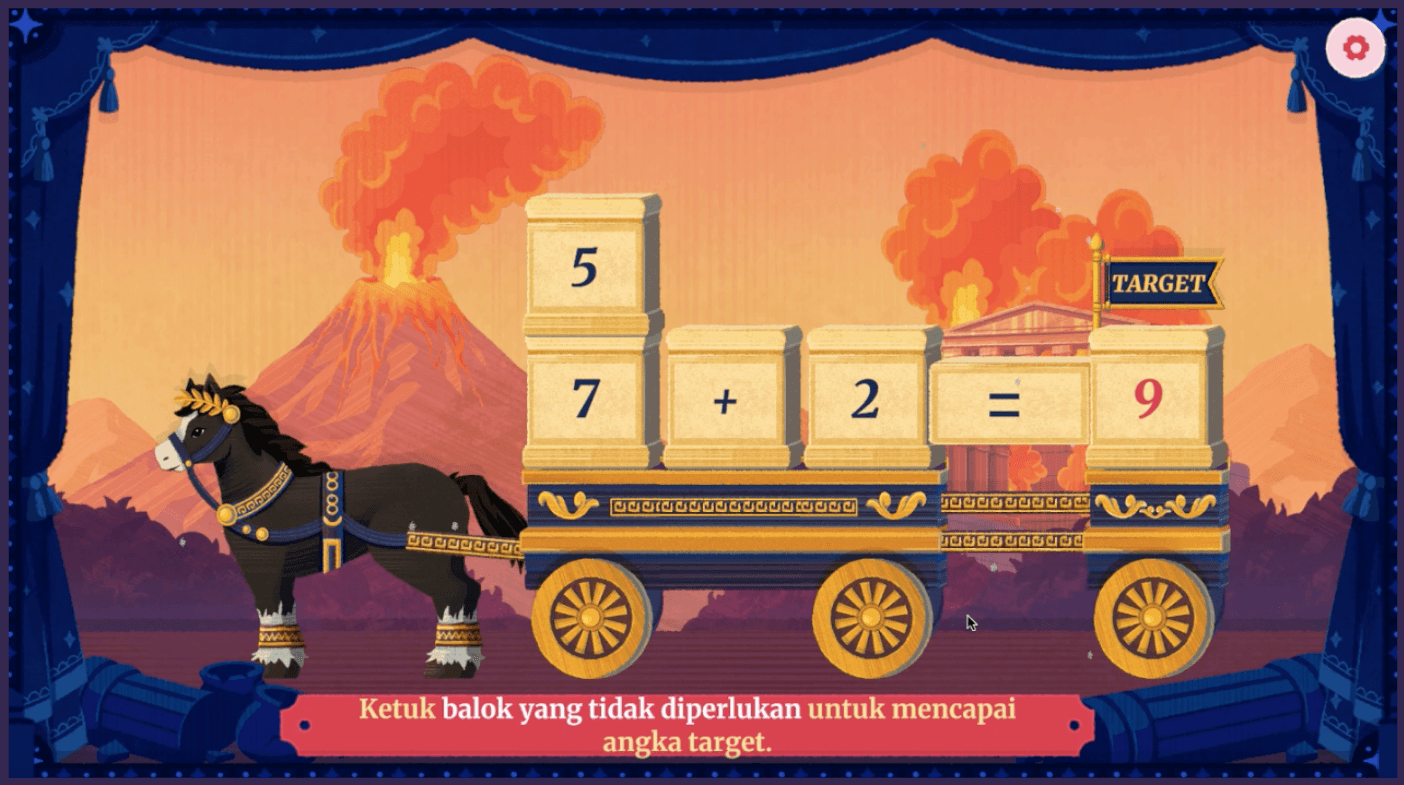
Seven short, timed games on processing speed, working memory, reasoning and more. They capture speed and consistency as well as correct answers, and give you a benchmark for learning agility.
Cognitive moduleFirst pass: Neuroscience
Six games that show motivation, appetite for risk, effort allocation and emotion recognition through behavior people don't consciously control. All of these are easy to misjudge in a one-hour interview.
Neuroscience moduleFinal round: Simulation
Two business scenarios. Finalists review cases and write a business report, then allocate a budget against a live timer. Every finalist gets the same scenario, set in your industry, without the cost of running an assessment center.
Simulation module
From applicant list to ranked shortlist, with no scoring by hand.
Invite
Upload the whole intake from one CSV file. Branded invitations go out automatically, and candidates who haven't started get a reminder.
Start securely
Device checks and anti-cheat logic run before the first game. Candidates play in a phone or laptop browser, with nothing to download.
Play
The intake works through the cognitive and neuroscience games, and finalists through the simulation. You can see who has started, who has finished and who hasn't opened the invitation yet.
Decide
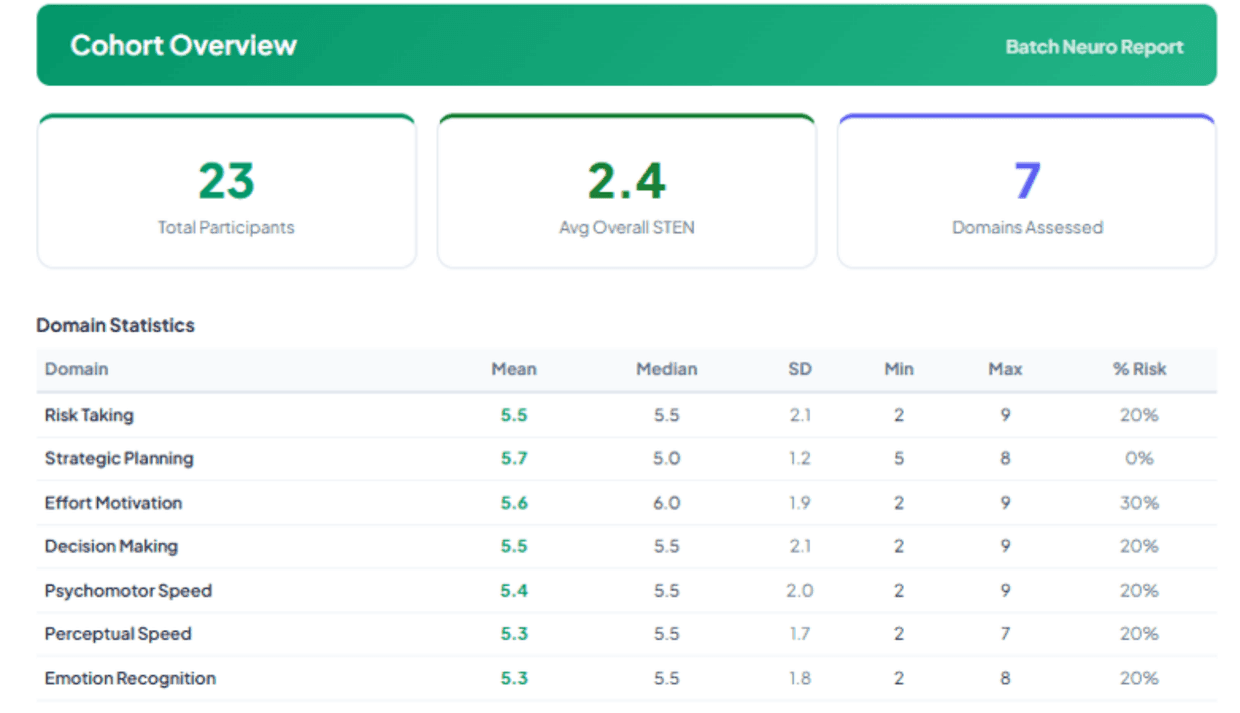
Reports are ready as soon as each candidate finishes. The batch report ranks the whole intake, flags everyone below your cut-off and summarizes each role track.
Trusted by 40+ brands across Indonesia.











Questions about assessing a Management Trainee intake.
How many Management Trainee candidates can you assess at once?
As many as your intake needs, at the same time. A national telecom group used DEUS to assess more than 1,000 Management Trainee candidates across 30+ provinces at once, with results within a day, two years in a row. The platform sends the invitations and reminders, tracks progress and generates the reports, so a nationwide intake doesn't mean adding people to your HR team.
Which modules should we use for Management Trainee recruitment?
Cognitive and Neuroscience for the first pass, then Simulation for the final round. The first two shortlist a large applicant pool quickly and fairly. Simulation then shows how each finalist analyzes a business case, prioritizes and allocates a budget under real time pressure. You can start with one module and add others later.
How quickly do we get results?
Scores and reports are generated as soon as each candidate finishes, so nobody on your team grades anything. The batch report ranks the whole intake and flags everyone below your cut-off. If you add the Personality module, its profiles are ready the same day or the next.
Can candidates cheat or prepare for it?
Neither is easy. Every session starts with device checks and anti-cheat logic, and because the games measure how candidates behave, there's little to look up or memorize. How someone plays is hard to fake: the scoring uses each choice and how quickly it's made, even under time pressure.
How much does a Management Trainee assessment cost?
Pricing starts from IDR 69,000 per candidate, and the price per candidate gets lower as your volume grows. You pay only for the modules you choose, and there's no long-term contract, so you can pay per batch. Ask for a quote and we'll price it for your intake.
Related guideHow to run Management Trainee recruitment at scale
Running an MT or campus drive?
We'll show you each step of a nationwide intake on DEUS, up to the final ranked list.